Seven months after opening a new Instagram account, Jessi Jean had built an audience of more than 400,000 followers and launched an online course that generated $1.2 million.
More than 4,600 people joined the first cohort.
When enrollment opened again for the second round, Inc. reported that Jessi generated another $1.2 million in a single day.
Those numbers are remarkable, but they don't tell the whole story.
What's more interesting is that Jessi didn't start with a plan to build a seven-figure course. She didn't even know that teaching people how to talk on camera would become her business.
For years, being on camera was something she actively struggled with.
Eventually, it became the thing people knew her for.
Starting From Zero — Again
Before launching her new account, Jessi had spent seven years building a coaching business in another niche.
She already had an audience, experience, and an established online presence. According to Inc., several content experts advised her to take that audience with her when she moved into a new chapter.
Instead, she started over.
In November 2025, Jessi opened a new Instagram account and began posting from scratch. On her website, she describes the beginning simply: she started talking to her phone.
There wasn't a tightly defined content strategy behind it.
Her early posts covered furniture flipping, personal finance, career uncertainty, and whatever else she was thinking about or experiencing at the time.
The account didn't launch with a polished personal brand or a product waiting behind the scenes. Jessi was still figuring out what she wanted to talk about.
One thing, however, became increasingly clear: people responded to her direct-to-camera videos.
That was somewhat ironic. Jessi had previously found this format difficult. But it was also the most practical option. She told Inc. that talking-to-camera videos were the fastest type of content for her to make, which mattered because she had limited time.
She stuck with it.
Within months, the new account had grown into an audience of more than 400,000 followers across platforms. Jessi says on her own website that she went from zero to 400,000+ followers in roughly five months.
A Viral Video Changed the Direction of the Business
The course Jessi eventually launched wasn't her original idea.
At the time, she was collecting email addresses for a different beginner content creation course. Then, in February 2026, she posted a video called "how to yap on camera like a pro."
The video took off on both Instagram and TikTok.
Rather than treating the response as a lucky moment and moving on, Jessi paid attention to what people were responding to.
The topic was clearly resonating.
She changed the focus of her waitlist, moving away from the original course idea and toward teaching people how to speak more confidently and naturally on camera. According to Inc., the new waitlist began growing faster than the previous one.
That decision shaped what came next.
Jessi didn't create a product in isolation and then spend months trying to convince people they needed it. The demand appeared first, through the reaction to her content.
The audience didn't hand her a business plan.
But they gave her a strong indication of where the opportunity was.
From One Video to the Yap Challenge
The result was the Yap Challenge, a program built around helping people become more comfortable speaking directly to the camera.
Participants are challenged to create 40 posts while working on content, communication, delivery, and on-camera confidence.
The connection between Jessi's content and the product was unusually direct.
People didn't have to take her word for it. They could see her approach in action every time she posted.
Her content was, in many ways, the proof behind the product.
The first launch ran for 14 days. According to Inc., it generated approximately $1.2 million in sales and enrolled more than 4,600 students. The publication also reported that the launch was completed with zero ad spend.
When the second cohort opened on June 22, Jessi reportedly generated another $1.2 million in a single day.
That is obviously not a typical course launch.
But the sequence behind it is worth looking at: content came first, audience response followed, and the product was built around the strongest signal.
She Didn't Promise It Would Work for Everyone
Another part of Jessi's launch stood out because it went against the usual playbook for selling online courses.
She was unusually direct about what she could and couldn't promise.
When people asked how her course compared with others, she told Inc. that she hadn't taken many courses in the same category and couldn't pretend to know exactly how they compared.
Her position was straightforward: she could teach what she knew and what she had personally done.
Her sales page carries the same tone.
"I'm not your content guru."
Jessi also makes it clear that the program isn't designed to guarantee overnight virality. She explicitly says she cannot promise participants even a single new follower.
That kind of language is uncommon in an industry built around bold outcomes and transformation stories.
Instead of selling certainty, the product is centered on learning a skill and doing the work.
For Jessi, that honesty appears to have strengthened the trust she had already built with her audience.
Letting People See the Launch as It Happened
Jessi also didn't hide the emotional side of the launch.
According to Inc., she initially expected to make around $100,000 over two weeks. When sales moved close to that figure far sooner than expected, she talked openly about how surprised she was.
She shared the excitement, but also the discomfort that came with suddenly receiving a level of attention she hadn't anticipated.
One comment from a follower stayed with her.
The person wrote that Jessi had made success feel closer.
That says something about the way she presented the launch.
Her audience wasn't simply shown the final numbers after everything was over. They watched her experience what was happening in real time.
The surprise was visible. So was the excitement and, at times, the uncertainty.
That can create a very different relationship with an audience than presenting yourself as someone who always has the next move planned.
The Story Isn't Really About Going Viral
The obvious version of this story goes something like this:
A creator posts a viral video, gains hundreds of thousands of followers, launches a course, and makes $1.2 million.
But that misses the more useful part.
Going viral gave Jessi attention. What she did with that attention mattered more.
She noticed that one topic was generating significantly more interest than the product she had originally planned to create. Instead of staying committed to the first idea simply because it was already underway, she changed direction.
Creators get these signals all the time.
A question appears repeatedly in comments.
The same topic keeps coming up in DMs.
One post performs far better than everything else.
People ask for more.
Sometimes those signals point toward content opportunities. Sometimes they point toward a product.
Jessi's story is a good reminder that content isn't only useful for promoting something you've already built.
It can also help you figure out what to build next.
You Don't Need Everything Figured Out Before You Start
New creators often feel pressure to have the entire business mapped out before publishing their first piece of content.
The niche needs to be clear. The brand needs to look right. The product needs to be ready. There should be a strategy, a website, and a plan for making money.
Jessi's path was far less orderly.
She started a new account and posted about different parts of her life. She found a format that was practical enough to repeat. One topic gained unexpected momentum, and she followed it.
That doesn't mean every viral post should become a business. Nor does it mean every creator who starts posting content will eventually launch a million-dollar course.
But there is something valuable in the order of events.
Create.
Pay attention.
Learn from the response.
Then decide what deserves more of your time.
Sometimes market research happens before you build a product.
Sometimes it happens after you publish a video.
Final Thoughts
Jessi Jean's story is easy to notice because of the numbers.
A $1.2 million launch. More than 4,600 students. Hundreds of thousands of followers built from a new account.
But those numbers came at the end of the story, not the beginning.
Before the course, there was a video that unexpectedly connected with people.
Before that, there was a new account with no established audience.
And before that, there was someone trying to figure out what came next.
The business didn't emerge from a perfect blueprint. It developed through consistent content, audience feedback, and a willingness to change direction when something showed real potential.
For creators, that may be the most useful takeaway.
You don't always need to know exactly what you're going to sell before you start creating.
Sometimes the people watching will show you where to look.
Build Your Creator Business With CreatorStore
Once you understand what your audience wants, you need a simple way to turn that interest into a business.
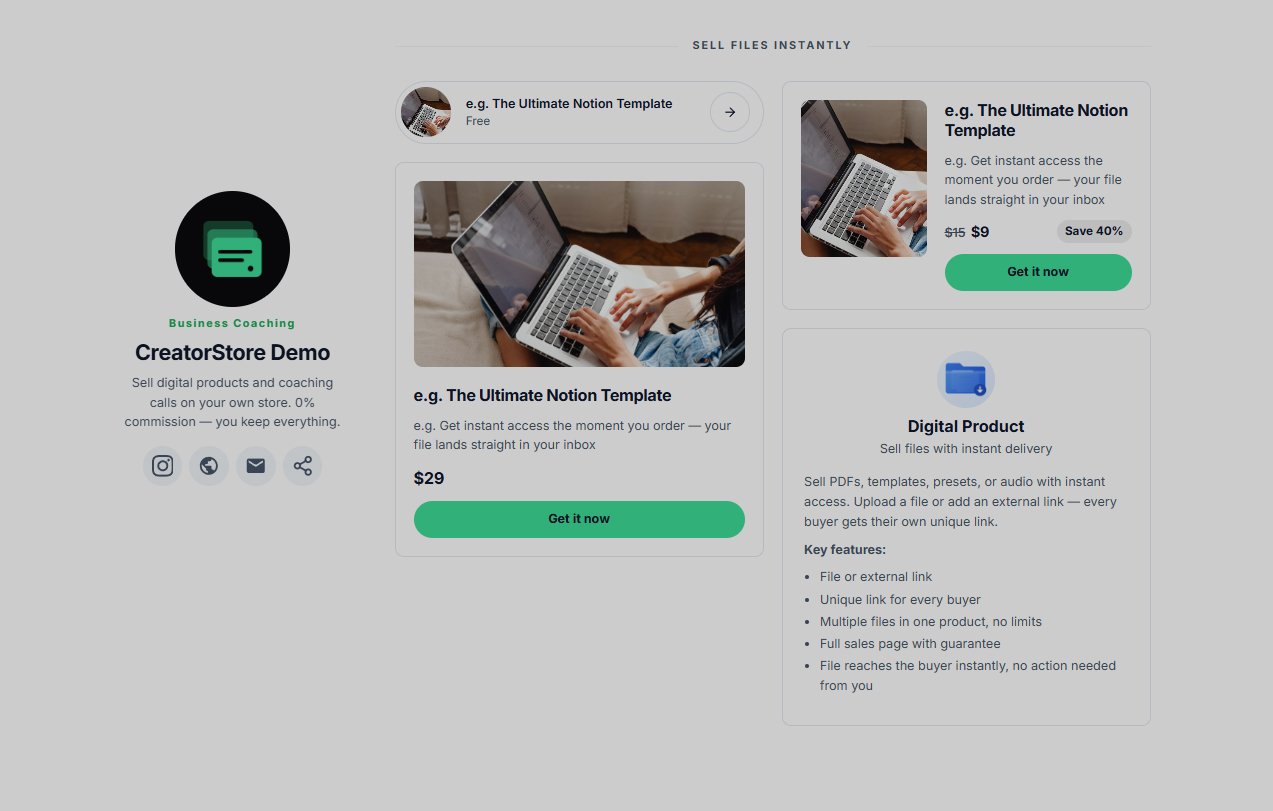
CreatorStore helps digital creators sell digital products, coaching sessions, services, and other offers through their own storefront.
Whether you're testing your first idea or building an established creator business, CreatorStore gives you the tools to bring your offers together and sell directly to your audience.
Start building your creator business with CreatorStore.
Sources
This article was independently written based on publicly available information and the reporting of Inc. Magazine.
The primary source used was Inc. Magazine's article, "How This Creator Turned Yapping on Camera Into a 4,000-Customer, $1.2 Million Launch."